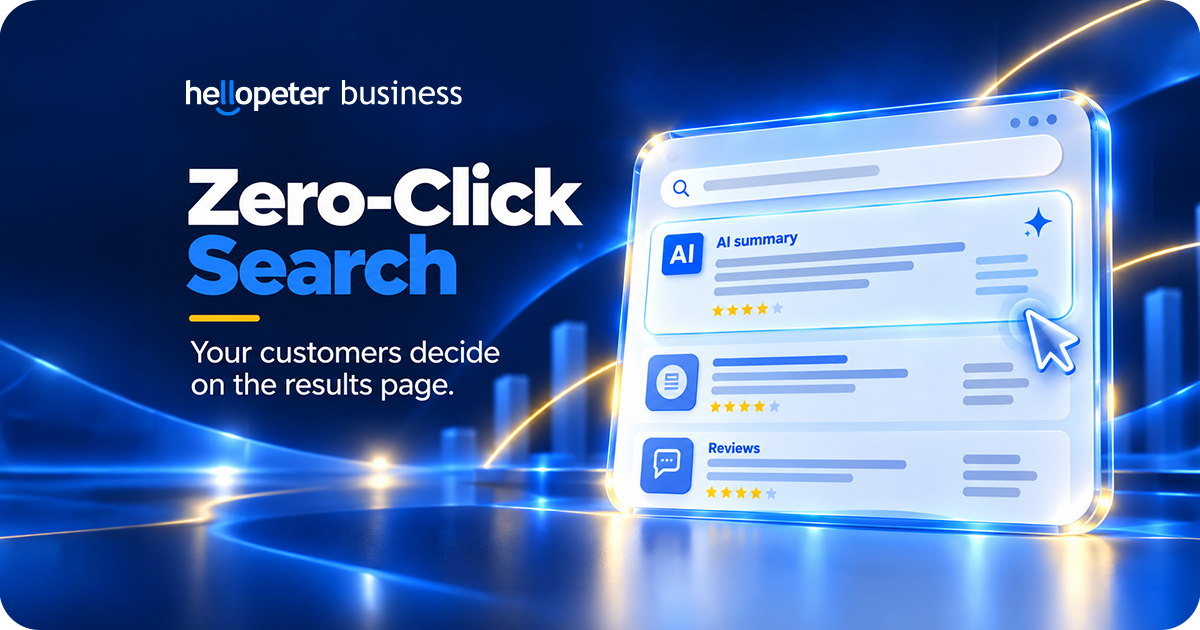
For years the goal of search was simple: get onto page one and the clicks would follow. That deal has changed. Most Google searches now end without a click on any website, and since Google's AI started answering questions itself, even fewer people click through. This is zero-click search, and it changes where South African customers make up their minds about your business.
In the EU it's 59.7%. For every 1,000 US searches, only 360 clicks go to the open web.
What Zero-Click Search Means
A zero-click search ends on Google itself. The searcher reads what they need on the results page, or searches again, and never visits a website. SparkToro's 2024 study, built on clickstream data from Datos, found that 58.5% of Google searches in the US and 59.7% in the EU end this way.
There's no published South African figure yet. The pattern is global, though, and the feature pushing it further is now live here.
AI Answers Have Cut Clicks Further
Google's AI Overviews, the AI-written summaries at the top of the results, started rolling out in South Africa in late October 2024. When they appear, people click less. Pew Research studied the real browsing of US adults in 2025 and found that people who saw an AI summary clicked a regular search result in 8% of visits, against 15% when there was no summary. Only 1% of those visits included a click on a link inside the summary itself.

For most people, the summary is the answer, and they stop there.
Where South Africans Now Decide
Think about what happens when someone checks out a business before they buy. They search the name, often with "reviews" or "complaints" added. What comes back already holds an answer: an AI summary, star ratings and a list of review sites. Many people decide right there, on the results page.
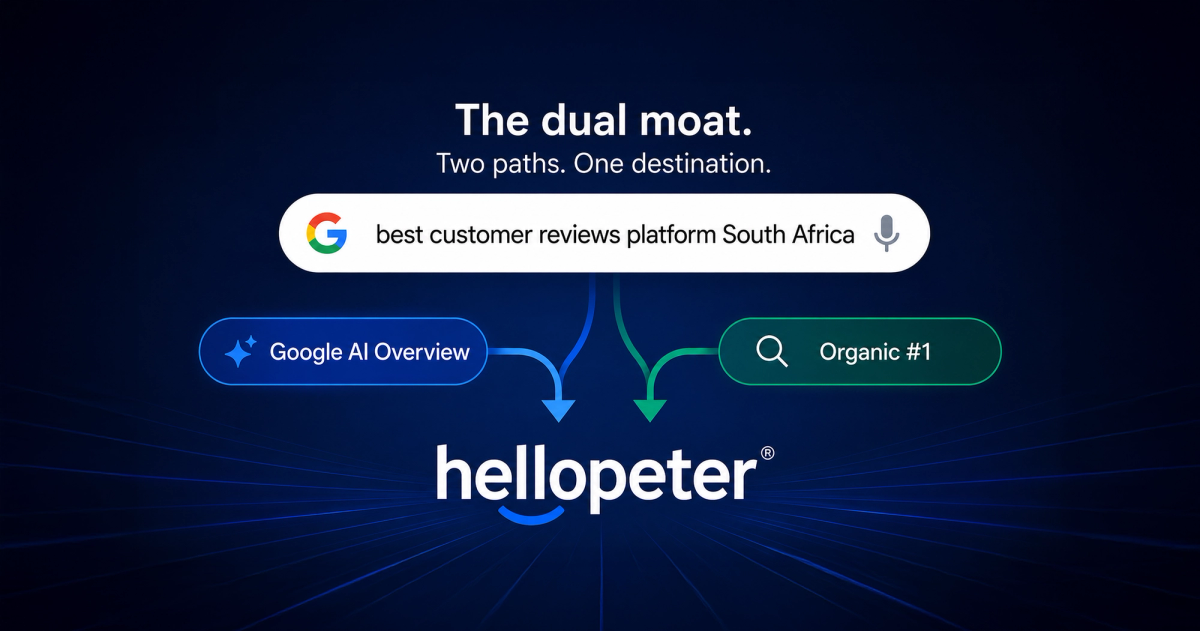
For South African businesses, Hellopeter is often part of that answer. Hellopeter pages earn more than 500 million Google impressions a year, and Google's AI regularly draws on Hellopeter when it summarises a South African brand's reputation.
In our April 2026 test, Google's AI quoted Hellopeter's TrustIndex as a plain fact for several major brands. For DStv, the source panel beside the summary read "DStv (MultiChoice) Reviews | 1.7 TrustIndex | Hellopeter.com".
That's the shift. A customer can form a firm view of your business without visiting your website, or ours. What the results page says about you now matters more than where your own site ranks on it.
Rankings Still Matter, Just Less on Their Own
None of this means SEO is finished. People still click when they're ready to act, to buy, book or ask for a quote, and your website has to be easy to find and easy to trust when they do. But for the searches where customers judge you, such as "[your business] reviews" or "is [your business] any good", the results page does the persuading before anyone reaches your site.
That's also why reviews and search work together. Our comparison of Hellopeter and Google Reviews shows how each one shapes what customers see when they look you up.
What to Do Instead of Chasing Clicks
- See what the results page says about you. Search your business name with "reviews" and with "complaints", and ask an AI assistant what customers say about you. That's what your next customer sees.
- Strengthen the sources the AI reads. AI summaries lean on reviews from real customers, so keep fresh reviews coming and keep your Hellopeter profile complete. Collect reviews with Hellopeter's tools, and Hellopeter's 25-plus years of search authority does the reach you couldn't build alone.
- Reply in public. Your replies sit right under the reviews customers read, and on Hellopeter, replying quickly lifts your TrustIndex, the number Google's AI has been quoting.
- Make your own site easy to quote. Clear facts, plain answers and structured data help AI assistants describe you accurately. Our guides to answer engine optimisation and getting cited by ChatGPT walk through the steps.
- Measure what people see as well as what they click. Track impressions in Google Search Console alongside clicks. A good result can win you a customer without ever sending you a visit.
If you want to know what a bad review on that results page costs you, read what negative reviews really cost your business.
A Note on This Data
The click studies in this article measured search in the US and EU; there's no published South African equivalent yet. The Hellopeter figures and Google AI examples were accurate at the time of publication. Hellopeter's scores are generated from real customer reviews, not set by Hellopeter or by the businesses themselves.
See how many people judge you before they click
Get a free report of how many people see your Hellopeter page, what your reputation is worth, and what your reviews say about you.