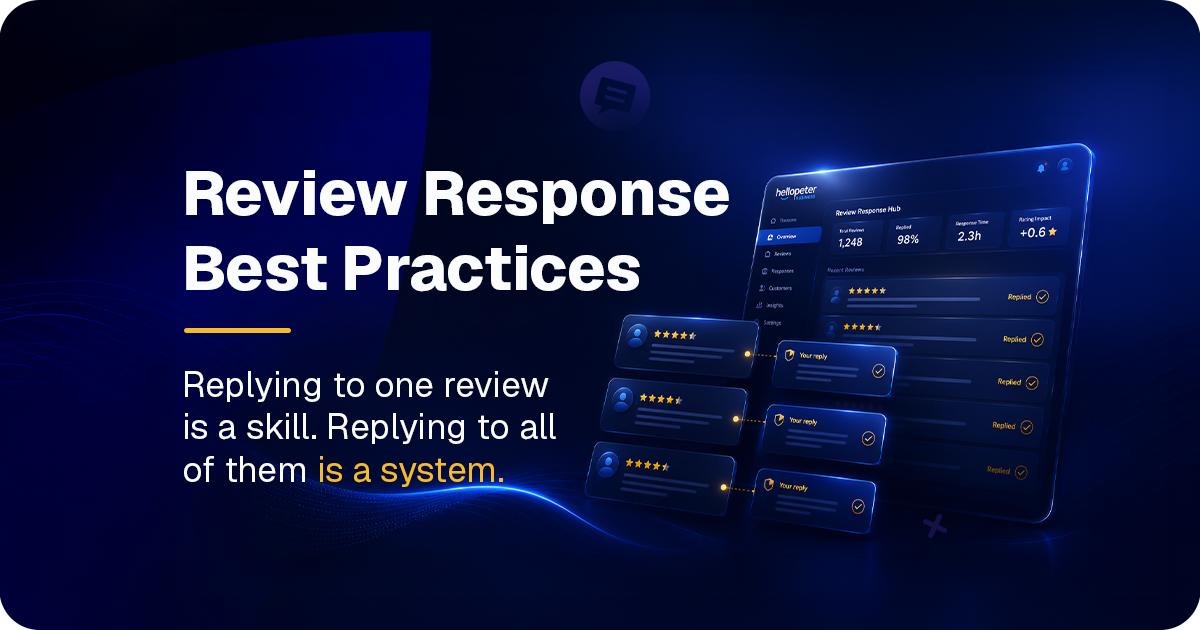
Replying well to one review is a skill. Replying to all of them, quickly and consistently, every week, is a system. And it's the system, not the individual reply, that actually moves your reputation. This guide is about building that programme: the habits, the ownership, and the measurements that turn review responses from a chore into one of the highest-return things your business does. For the craft of writing a single reply, especially a difficult one, see our guide on how to respond to negative reviews.
Your TrustIndex is built partly on how quickly and how recently you reply, not only on star ratings. Responding fast and consistently is a reputation lever entirely within your control.
Reply to Every Review, Not Just the Bad Ones
The most common mistake is treating responses as damage control: only replying when something goes wrong. Reply to the positive ones too. It takes seconds, it thanks the customer who took the time, and it signals to every reader that you're present and listening. A profile where the business replies to praise as readily as to complaints reads as a business that cares, and the contrast with a competitor who only shows up to firefight is stark.
The Best Practices That Make It a Programme
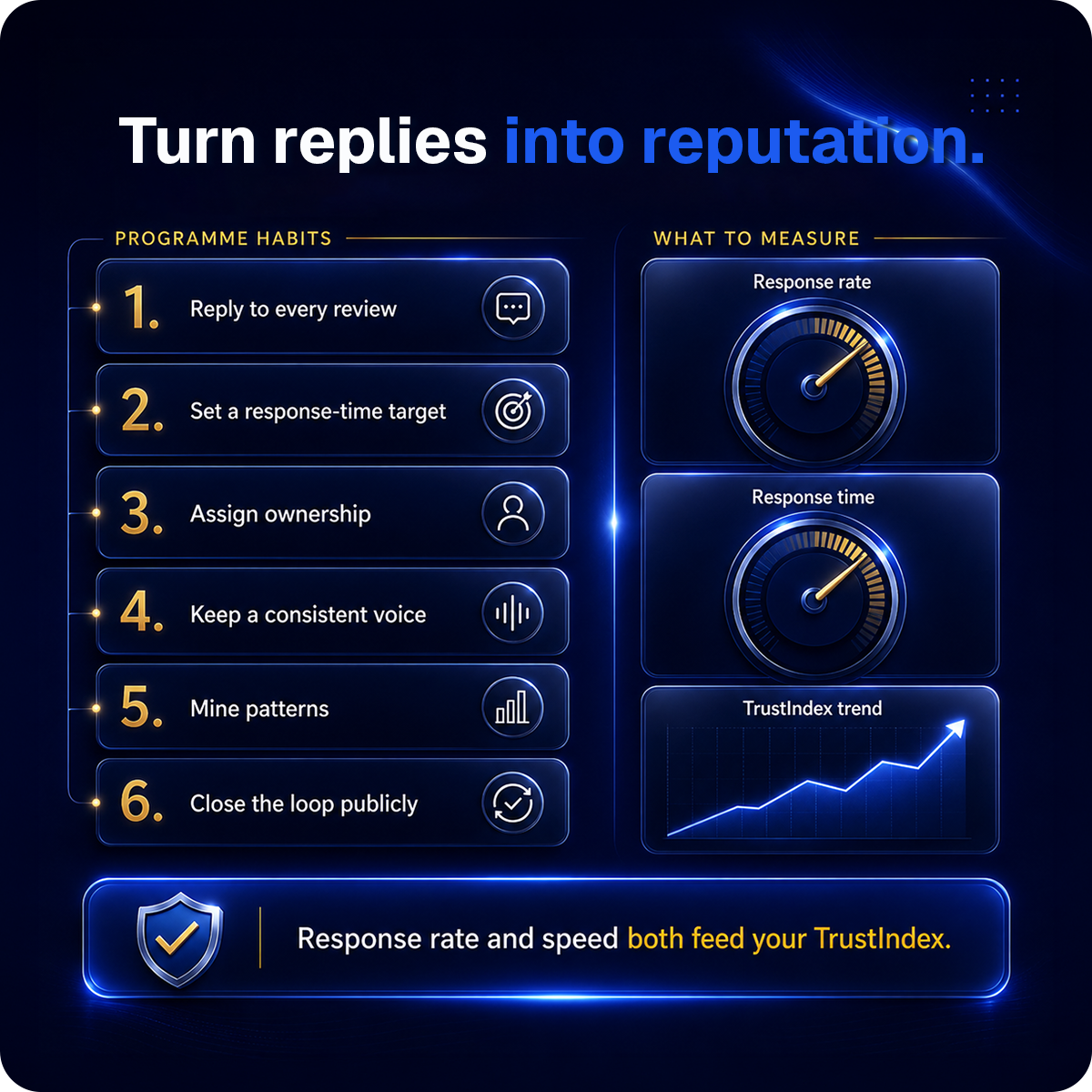
- Set a response-time target. Decide your standard, for example a first reply within 24 to 48 hours, and hold to it. Speed is visible to readers and it feeds your TrustIndex. A fast reply to a complaint also stops it festering into something bigger.
- Assign clear ownership. Someone owns review responses, with a defined escalation path for the hard ones (a disputed claim, a legal-sensitive complaint). When everyone is responsible, no one is, and reviews sit unanswered.
- Write a short response guide. One page: your tone, your do-not-says, two or three approved openings, and when to escalate. It lets anyone on the team reply in a consistent voice without freezing or going off-message.
- Personalise every reply. Use the customer's name and refer to their specific issue. Customers, readers and AI search all recognise a copy-pasted response, and it undoes the goodwill.
- Mine responses for patterns. Your reviews are the cheapest customer research you'll ever get. If three reviews this month mention slow claims or a confusing fee, that's a root cause to fix, not just three replies to write.
- Close the loop publicly. When you resolve something raised in a review, post a short public update. That short update is what turns a resolved complaint into visible proof you put things right.
Measure the Programme, Not Just the Mood
What gets measured gets done. Track three things monthly:
- Response rate: the share of reviews you've replied to. Aim for as close to 100% as you can.
- Response time: your average time to first reply. Watch the trend, not just the number.
- Reputation trend: your TrustIndex and your theme scores over time, and how you compare to competitors.
A programme that improves all three is a programme that's lifting your reputation in a way customers and AI search can both see.
Why This Compounds
A single good reply helps one thread. A consistent response programme changes the whole picture the market sees. Over months, a high response rate, fast replies and visibly resolved complaints build a profile that reads as trustworthy at a glance, ranks well, and gives AI search a favourable, well-evidenced summary to quote. Reputation isn't won in a crisis. It's won in the unglamorous discipline of replying to every review, every week.
How to Run It Without It Becoming a Second Job
The reason most review-response programmes fail is friction: reviews scattered across places, no alerts, no single workflow. Hellopeter brings every review into one place, alerts you when a new one lands so you can hit your response time, lets you reply at scale, and shows you the theme patterns and how you compare to up to five competitors on the platform. The goal is a programme that runs in minutes a day, not a fire drill that runs your week.
Put a number on your reputation
See what your reputation is worth in rand, how you compare in your industry, and what an unanswered review costs. Free, two minutes.