




Hellopeter
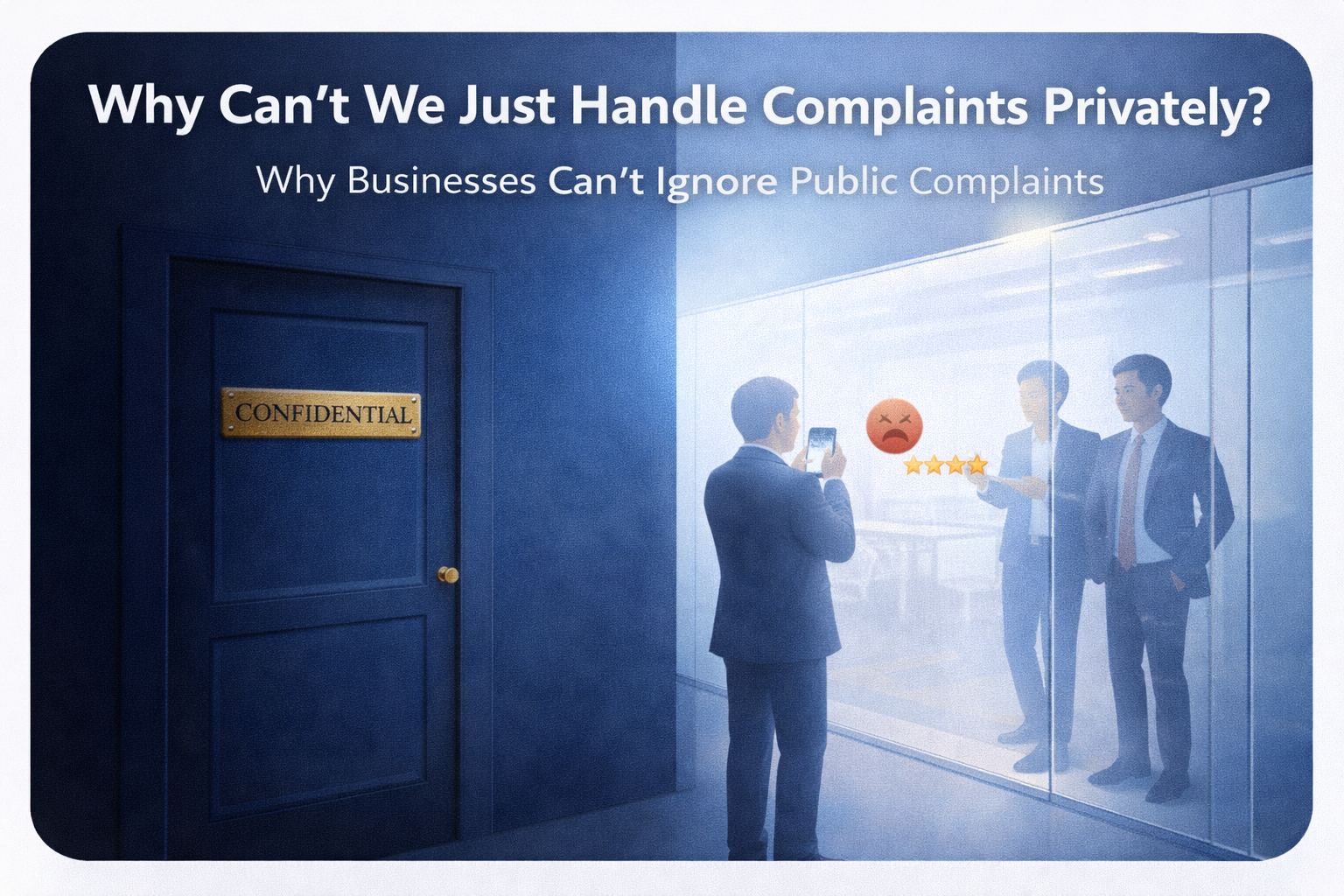
"Why can't we just handle complaints privately?" is one of the most common questions leadership teams ask when evaluating whether to invest in public reputation management.
The logic feels sound: Handle customer issues directly and discreetly. Resolve problems without creating public spectacle. Maintain control of sensitive information. Protect the brand by keeping complaints out of public view.
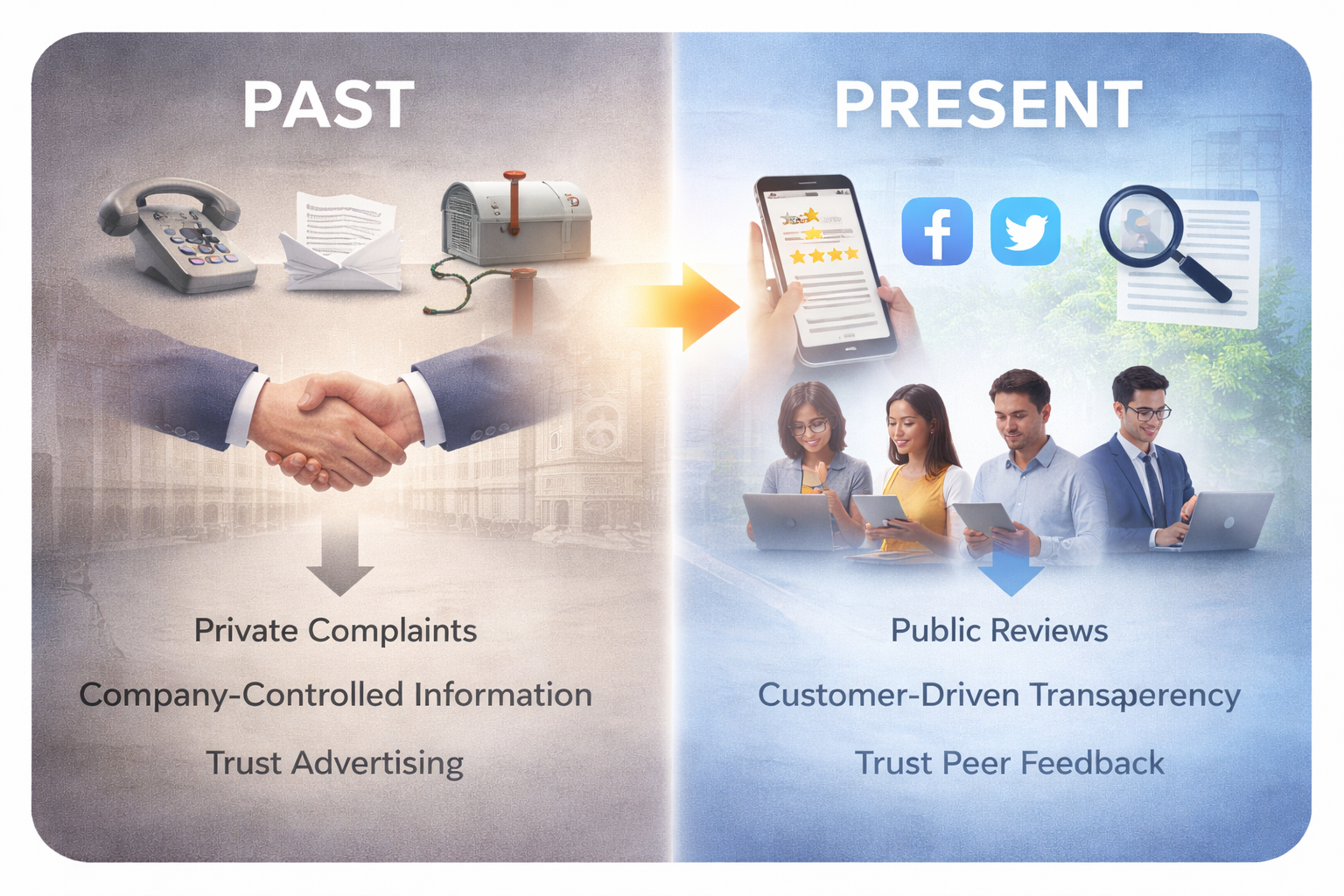
This approach worked reasonably well twenty years ago when customer complaints were largely private, phone calls to customer service, in-person conversations, or written letters that remained between company and customer.
Today, this strategy creates more risk than it prevents. In an environment where transparency is expected and information flows freely, handling complaints only privately while remaining silent publicly doesn't protect reputation, it damages it.
This article examines why private-only complaint handling no longer works in modern markets, what public silence communicates regardless of private efforts, how transparency expectations have fundamentally changed, and what businesses should do instead. Understanding why silence on public complaints damages brand credibility provides essential context for why private-only strategies fail.
The Private Resolution Logic (And Why It Fails)
To understand why private-only complaint handling creates problems, let's first examine the reasoning behind it and where the logic breaks down.
The Traditional Private Resolution Case
Leadership teams typically advocate private-only complaint handling for understandable reasons:
Perceived advantages of private resolution:
Confidentiality control: Sensitive customer or business information stays private. Competitive intelligence isn't revealed through public discussions. Legal exposure feels contained through private communications.
Narrative control: Company controls what information is public. Complaints don't become rallying points for other dissatisfied customers. Brand image isn't "tarnished" by visible complaints.
Customer relationship preservation: Direct personal contact feels more respectful than public exchange. Customers might appreciate private attention rather than public discussion. Resolution can be customized without public commitment.
Resource efficiency: Seems less time-consuming than public engagement. One private conversation rather than public response plus private resolution. Doesn't require training team on public communication protocols.
These perceived advantages made sense in an era of limited information flow. The problem is that every assumption behind them has been invalidated by how modern markets actually operate.
Where the Logic Breaks Down
Each perceived advantage of private-only handling contains flawed assumptions:
"Confidentiality control"
- Assumption: Private handling keeps information confidential.
- Reality: The complaint is already public (on Hellopeter, Google, social media). Silence doesn't make it disappear, it just removes your side of the story.
"Narrative control"
- Assumption: Not responding publicly prevents negative narrative.
- Reality: Silence cedes narrative control to the complainant. Observers interpret silence as confirmation of complaint validity.
"Customer relationship preservation"
- Assumption: Private contact is more respectful than public acknowledgment.
- Reality: Most complainants post publicly because private channels failed. Public acknowledgment validates their concern; continued silence suggests disrespect.
"Resource efficiency":
- Assumption: Private handling requires less effort than public engagement.
- Reality: Unaddressed public complaints create ongoing reputational costs far exceeding the effort of public acknowledgment. This connects to what negative reviews really cost businesses in terms of conversion, CAC, and revenue impact.
The fundamental flaw in private-only strategies: they assume you can choose whether complaints are public. In reality, complainants make that choice. Your only choice is whether your response is also public.
The Problem With Private-Only Resolution: Observer Perception
The critical error in private-only complaint handling is focusing exclusively on the complainant while ignoring the much larger audience of observers.
Who Actually Sees Public Complaints
When a customer posts a complaint on a public platform, the audience isn't just the complainant:
The observer audience:
- Prospective customers researching your business before purchasing
- Existing customers monitoring whether service quality is declining
- Business partners evaluating relationship risk
- Investors and stakeholders assessing operational quality
- Employees observing organizational values in action
- Regulators monitoring compliance and customer treatment
- Media and researchers investigating industry practices
Audience size comparison:
- The complainant: 1 person
- Observers over 12 months: Hundreds to thousands depending on your market visibility
Your response (or lack of response) communicates primarily to observers, not the complainant. Private resolution addresses 1 person. Public silence communicates to hundreds or thousands.
What Observers See vs. What Actually Happened
This is where private-only strategies create the most damage the disconnect between reality and perception:
What Actually Happened (Private Resolution):
- Customer posts complaint publicly
- Company sees complaint and contacts customer privately
- Customer and company discuss issue privately
- Issue is resolved to customer's satisfaction
- Customer receives refund/replacement/apology
- Customer relationship is restored
What Observers See (Public Record):
- Customer posts complaint publicly
- Company provides no public response
- Complaint remains visible and unanswered
- Pattern of similar unanswered complaints accumulates
- Company appears unresponsive and unaccountable
Observer conclusion: "This company ignores customer complaints. When problems occur, they don't engage. I shouldn't do business with them."
This conclusion is drawn regardless of excellent private resolution because observers can't see what happens privately. From their perspective, a complaint without public response equals a company that doesn't care about customer issues.
The Minimal Public Acknowledgment Solution
The fascinating aspect of this problem is how little public engagement is required to change observer perception:
Minimal sufficient public response: "Thank you for bringing this to our attention. We've contacted you directly to address your concerns and are committed to resolving this matter promptly."
What this achieves:
- Demonstrates company monitors feedback and responds
- Shows accountability and willingness to engage
- Signals customer concerns are taken seriously
- Provides context for observers without disclosing confidential details
- Maintains ability to handle resolution details privately
This minimal public acknowledgment costs perhaps 5 minutes but completely changes observer perception from "company ignores complaints" to "company engages with customer concerns."
The private-only strategy fails because it saves 5 minutes of public engagement while creating thousands of dollars in reputational cost through negative observer perception.
How Transparency Expectations Have Changed
Understanding why private-only strategies no longer work requires recognizing fundamental shifts in stakeholder expectations.
The Shift from "Companies Control Information" to "Information Flows Freely"
Previous era (pre-internet):
- Companies controlled which information became public
- Customer experiences were private unless companies chose to share
- Reputation was shaped primarily by company messaging
- Complaints required significant effort to make public (media coverage, formal complaints)
Current era:
- Customers can make any experience public instantly and effortlessly
- Company control is limited to their own response, not the information itself
- Reputation is shaped primarily by customer testimony and company behavior
- Making complaints public requires seconds (post to Hellopeter, Google, social media)
Leadership teams sometimes operate as though we're still in the previous era, where companies could choose what became public. This is fundamentally incorrect customers control what becomes public. Companies only control whether they respond.
The Shift from "Trust Company Messaging" to "Trust Customer Testimony"
Previous era:
- Consumers relied heavily on company advertising and marketing for information
- Independent verification was difficult and time-consuming
- Trust was established through brand reputation and marketing
Current era:
- Consumers trust peer reviews and customer testimony more than company messaging
- Verification is instant and comprehensive (5-minute Google search reveals patterns)
- Trust is established through demonstrated behavior under scrutiny
Research by Nielsen consistently shows that 70-80% of consumers trust online reviews as much as personal recommendations, while only 33% trust advertisements.
This means: Your marketing claims about customer service are trusted by 33% of prospects. Customer reviews about your actual service are trusted by 70-80% of prospects. When reviews contradict marketing, prospects believe reviews.
Private resolution doesn't appear in reviews. Public silence does. The perception (company ignores complaints) overwhelms the reality (company resolves privately).
The Shift from "Perfection Expected" to "Accountability Expected"
Previous era:
- Companies tried to project perfection through controlled messaging
- Admitting problems felt like weakness
- Best strategy seemed to be hiding problems
Current era:
- Consumers understand problems occur in any business
- What matters is how problems are handled when they arise
- Transparency about challenges is valued more than claims of perfection
- Accountability is seen as strength, not weakness
This is perhaps the most important shift: Modern consumers don't expect perfection they expect accountability.
A company with visible complaints that are acknowledged and resolved is often trusted more than a company with perfect ratings and no engagement, because the former demonstrates real capability under pressure while the latter raises suspicion (either fake reviews or insufficient volume to be reliable).
The Shift from "Private Resolution Sufficient" to "Public Accountability Required"
Previous era:
- Handling complaints privately was considered professional and appropriate
- Public discussion of customer issues was seen as unprofessional
- Privacy was valued by all stakeholders
Current era:
- Public complaints require public acknowledgment to maintain credibility
- Private-only resolution is interpreted as avoiding accountability
- Transparency is valued by stakeholders more than privacy (except for genuinely confidential details)
The norm has shifted from "good companies handle things privately" to "good companies demonstrate accountability publicly while handling details privately."
Private-only strategies appear outdated and defensive rather than professional and appropriate. This is why treating online reputation as a business risk requires adapting to current transparency expectations.
What Public Trust Actually Requires
Given these shifted expectations, what do stakeholders actually need from businesses to maintain trust?
Public Acknowledgment (The Minimum Threshold)
The absolute minimum for maintaining credibility in public complaint situations:
What's required:
- Acknowledge receipt of complaint
- Indicate you're taking it seriously
- Confirm engagement with customer
- Provide general timeline expectations
What's NOT required:
- Admitting fault before investigation
- Disclosing confidential customer information
- Resolving everything publicly
- Agreeing with complainant's characterization
Example template: "Thank you for bringing this to our attention. We take customer feedback seriously and have contacted you directly to understand and address your concerns. We're committed to resolving this matter and will follow up with you within [timeframe]."
This template:
- Acknowledges the complaint (demonstrates monitoring)
- Shows respect for customer (validates their concern)
- Indicates engagement (signals accountability)
- Provides expectation (demonstrates process)
- Maintains privacy for details (appropriate confidentiality)
This minimal public acknowledgment satisfies observer requirements for accountability while preserving ability to handle resolution details privately.
Public Updates on Resolution (The Credibility Builder)
Going beyond minimum threshold, public resolution updates build stronger credibility:
After private resolution is achieved: "Update: We've resolved this matter with [customer]. Thank you for giving us the opportunity to make this right. We've also implemented [general improvement] based on this feedback."
What this achieves:
- Demonstrates follow-through (didn't just acknowledge, actually resolved)
- Shows learning and improvement (feedback led to action)
- Closes the loop for observers (resolution confirmed)
- Builds trust through demonstrated capability
Businesses that provide resolution updates on public complaints demonstrate operational competence and customer-centricity far more effectively than marketing claims ever could.
Transparency About Systemic Issues (The Leadership Signal)
When multiple complaints reveal systemic issues, public transparency about improvements demonstrates leadership:
Acknowledging patterns: "We've received multiple complaints about (issue). We take this feedback seriously and have identified the root cause as (explanation). We're implementing [specific improvement] and expect completion by (timeline)."
What this achieves:
- Demonstrates leadership awareness and accountability
- Shows systematic approach to improvement
- Manages expectations transparently
- Builds trust through honesty about challenges
This level of transparency admitting systemic issues and explaining improvements is uncomfortable for many organizations. However, it builds more trust than defensive silence or claim that each complaint is an isolated incident.
The Specific Risks of Private-Only Strategies
Beyond general credibility damage, private-only complaint handling creates specific business risks.
Competitive Disadvantage
When competitors engage publicly and you don't, the contrast damages your competitive position:
Prospect comparison:
- Researches your company: sees unanswered complaints suggesting unresponsive service
- Researches competitor: sees acknowledged complaints with visible resolution
- Conclusion: competitor is more accountable, lower risk choice
Even if your private resolution is excellent and competitor's is mediocre, prospects choose based on visible signals. Public engagement gives competitors advantage regardless of private resolution quality.
Regulatory Risk Escalation
In South Africa's regulatory environment with active Consumer Protection Act enforcement and industry ombudsmen, public complaints without response can escalate to regulatory involvement:
Escalation pattern:
- Customer posts complaint publicly (Hellopeter)
- Company handles privately but doesn't acknowledge publicly
- Customer feels ignored (from their perspective, no public validation of concern)
- Customer escalates to ombudsman or National Consumer Commission
- Regulator asks why company didn't respond to public complaint
- Company explains they handled privately
- Regulator notes lack of public accountability suggests systematic issue
- Regulatory scrutiny increases beyond the individual complaint
Public acknowledgment of complaints often prevents escalation to regulatory involvement because customers feel validated and are more willing to work through company resolution processes.
Pattern Recognition by Markets
Individual complaints handled privately might seem successful. But patterns of private-only handling create systemic perception problems:
Market pattern recognition:
- Month 1: 3 unanswered public complaints. Few people notice.
- Month 3: 8 unanswered public complaints. Pattern starting to be visible.
- Month 6: 15 unanswered public complaints. Clear pattern of non-response.
- Month 12: 30+ unanswered public complaints. Systematic reputation problem.
Each individual complaint might have been resolved privately. But the accumulated pattern of public non-response creates market perception that company systematically ignores customer concerns.
Employee Morale and Culture Impact
Customer-facing employees observe how leadership handles public complaints. Private-only strategies send concerning internal signals:
Messages employees receive:
- "We care about customer issues privately but won't stand behind our service publicly."
- "We're not confident enough in our service to engage publicly."
- "Customer concerns aren't important enough for public acknowledgment."
This damages employee morale, particularly among teams who deliver excellent service but see their work unsupported by public engagement with inevitable issues.
Conversely, public engagement with complaints signals: "We stand behind our service." "Customer feedback matters." "We're accountable for outcomes." These messages strengthen customer-centric culture.
The Effective Hybrid Strategy: Public Engagement + Private Resolution
The solution isn't choosing between public or private it's combining them strategically.
The Optimal Approach:
Step 1: Public Acknowledgment (Within 24-48 Hours) Post public response on the platform where complaint appears acknowledging concern and indicating engagement.
Step 2: Private Contact (Concurrent With Public Acknowledgment) Contact customer through private channels to discuss details, gather information, and work toward resolution.
Step 3: Private Resolution Discussion Handle investigation, negotiation, and resolution details through private channels where confidentiality is appropriate.
Step 4: Public Resolution Update (After Private Resolution) Post brief public update indicating matter has been resolved, thanking customer for feedback, and noting any improvements implemented.
What This Achieves:
- For complainant: Feels validated publicly, receives actual resolution privately
- For observers: Sees accountability and follow-through, builds confidence
- For company: Maintains confidentiality where appropriate while demonstrating public accountability
- For employees: Sees leadership standing behind service commitments
This hybrid approach maximizes benefits while minimizing risks of either pure public or pure private strategies.
Handling Different Complaint Categories
The hybrid strategy adapts to different situations:
Legitimate service failures:
- Public: Acknowledge, apologize, commit to resolution
- Private: Resolve issue, provide compensation if appropriate
- Public update: Confirm resolution, note improvement
Misunderstandings or lack of information:
- Public: Acknowledge, indicate you're providing clarification
- Private: Explain policy/process/situation
- Public update: "Glad we could clarify this matter"
Unreasonable or invalid complaints:
- Public: Acknowledge concern, explain relevant policy/constraint
- Private: Offer to discuss if customer wants more information
- Public update: "We've explained our position and remain available for discussion"
Confidential or sensitive matters:
- Public: Acknowledge, indicate sensitivity prevents public discussion but you're engaging privately
- Private: Handle completely privately
- Public update: "This matter has been addressed confidentially with the customer"
Different situations require different approaches, but all require public acknowledgment as minimum threshold.
Common Leadership Concerns About Public Engagement
Despite clear rationale for public engagement, leadership teams often have specific concerns that prevent action.
Concern #1: "We'll Encourage More Complaints"
The fear: Public responses will encourage more people to complain publicly to get attention.
The reality:
- Complaints occur based on experience, not response strategy
- Public engagement doesn't create complaints, it manages them
- Non-response often encourages escalation (if ignored, complainant posts more, escalates elsewhere)
- Public resolution often reduces complaints (customers see issues get addressed)
Evidence: Companies that implement systematic public engagement typically see complaint sentiment improve and total volume stabilize or decrease over time as operational issues get addressed.
Concern #2: "We Might Say Something Legally Risky"
The fear: Public statements could create legal liability.
The reality:
- Carefully worded public acknowledgment creates minimal legal risk
- Patterns of ignored complaints create more legal risk (evidence of negligence, CPA violations)
- Legal review can establish templates and guidelines for public responses
- Focus on acknowledgment and process, not admissions of liability
Risk mitigation: Work with legal counsel to develop approved response templates and escalation protocols for complex situations. Most acknowledgments require no legal risk: "Thank you for bringing this to our attention. We're looking into this matter and will contact you directly."
Concern #3: "We Don't Have Resources for Public Engagement"
The fear: Public response requires significant staff time and cost.
The reality:
- Median mid-sized business receives 2-5 public complaints per week
- Standard acknowledgment requires 5-10 minutes
- Total time investment: 1-3 hours per week
- Cost of systematic engagement: R100k-R300k annually
- Cost of reputation damage from non-response: R2M-R10M+ annually
ROI analysis: Public engagement typically generates 5-20x ROI through improved conversion, reduced CAC, and better competitive positioning.
Concern #4: "Complaints Aren't Always Valid"
The fear: Public response validates complaints even when customer is wrong.
The reality:
- Acknowledgment ≠ agreement
- You can acknowledge concern while explaining your position
- Observers evaluate how you handle disagreement, not whether you always agree
- Professional handling of unreasonable complaints builds credibility
Example handling unreasonable complaint: "Thank you for your feedback. We understand you're disappointed. However, our policy (clearly states X), which was communicated (when/how). We've reached out to discuss this further, but our position remains that (explanation). We're always open to feedback about our policies."
This response acknowledges, explains, and maintains position without defensiveness.
Implementation: From Strategy to Execution
Understanding why public engagement matters is one thing. Implementing it systematically is another.
Step 1: Establish Monitoring
You can't respond to complaints you don't see:
What to monitor:
- Hellopeter Business platform
- Google Business reviews
- Social media mentions (@mentions, brand hashtags)
- Industry-specific review platforms
- News and media coverage
Monitoring tools:
- Hellopeter Business dashboard for centralized visibility
- Google Alerts for brand mentions
- Social media monitoring tools
- Weekly manual checks of key platforms
Step 2: Define Response Protocols
Ensure consistency through clear protocols:
Response SLAs:
- Initial acknowledgment: Within 24-48 hours
- Private customer contact: Within 24 hours of public acknowledgment
- Resolution update: Within 7 days of resolution
Approval workflows:
- Standard complaints: Customer service team authorized to respond
- Complex/sensitive: Escalate to management for review
- Legal concerns: Legal review before response
Quality standards:
- Professional tone (never defensive or dismissive)
- Acknowledge specific issue (not generic template)
- Commit to action (not vague promise)
- Follow through on commitments
Step 3: Train Teams
Customer-facing teams need skills and confidence for public engagement:
Training topics:
- Why public engagement matters
- How to acknowledge without admitting liability
- Response templates and examples
- When to escalate
- How to handle difficult situations
Ongoing support:
- Regular feedback on response quality
- Sharing examples of effective responses
- Troubleshooting challenging situations
- Celebrating successes
Step 4: Measure and Optimize
Track metrics to assess performance and improve:
Key metrics:
- Response rate (% of complaints receiving public response)
- Response time (hours from complaint to acknowledgment)
- Resolution rate (% ultimately marked as resolved)
- Sentiment change (complaint tone before/after engagement)
- Business impact (conversion rates, CAC, etc.)
Use data to identify areas for improvement and demonstrate ROI of systematic engagement.
Key Takeaways
Private complaint handling addresses complainants, but public silence communicates to the much larger observer audience. Observers can't see private resolution efforts they only see whether companies respond publicly. Modern stakeholder expectations require public accountability, not just private resolution. Minimal public acknowledgment (5-minute effort) prevents significant reputational damage. The optimal strategy combines public engagement with private resolution details. Private-only strategies create competitive disadvantage when competitors engage publicly. Public engagement prevents regulatory escalation and builds employee morale. Common leadership concerns about public engagement are based on misconceptions about risk and resource requirements. Systematic public engagement typically generates 5-20x ROI through improved business metrics. You can acknowledge publicly while maintaining confidentiality for resolution details.
Conclusion
The question "why can't we just handle complaints privately?" reflects understandable desire for control, confidentiality, and risk mitigation. However, it's based on assumptions about information flow and stakeholder expectations that no longer match reality.
In modern markets where information flows freely and transparency is expected, private-only complaint handling creates more reputational risk than it prevents. Observers interpret public silence as confirmation of poor service, regardless of excellent private resolution.
The solution isn't abandoning private resolution it's adding minimal public acknowledgment that demonstrates accountability to observers while handling resolution details privately with appropriate confidentiality.
For South African businesses operating in an environment of high consumer rights awareness, active regulatory oversight, and intense competition for trust, the cost of private-only strategies continues to increase as transparency expectations strengthen.
The businesses that adapt to modern transparency norms implementing systematic public engagement while maintaining private resolution channels will build competitive advantage through demonstrated accountability.
The alternative is allowing competitors who engage publicly to capture market share from businesses still operating under outdated private-only assumptions.
The question isn't whether to handle complaints (you must, privately). The question is whether you'll also engage publicly to demonstrate the accountability that modern markets require.
Ready to implement systematic public engagement while maintaining appropriate privacy? Explore Hellopeter for Business to establish monitoring, response protocols, and measurement systems that protect your reputation through transparent accountability.
Disclaimer:
This article is for informational purposes only and does not constitute legal, financial, or professional advice. HelloPeter makes no warranties regarding the accuracy or completeness of the information provided. Readers should conduct independent research and consult qualified professionals before making financial decisions. HelloPeter is not liable for any losses or damages arising from reliance on this information or interactions with third-party businesses. Consumer reviews on www.hellopeter.com represent individual opinions and should be considered alongside other sources when evaluating businesses.
RELATED ARTICLES
How to Request a Review Update: From Complaint to Resolved

Why Black Friday Customer Experience Beats The Discounts
How Super Communications Got to Rank #1 in 3 Industries on Hellopeter
UP NEXT
7 THINGS CUSTOMERS CHECK ONLINE BEFORE BUYING FROM YOU THIS BLACK FRIDAY