




Hellopeter
Negative reviews are often dismissed as isolated incidents, emotional outliers, or the inevitable cost of doing business at scale. Many executives ask whether they truly matter, especially when the business continues to function and revenue still flows.
This dismissal is understandable but dangerous. The real cost of negative reviews is rarely visible in a single report, isolated metric, or quarterly result. Instead, their impact is cumulative, distributed across multiple business functions, and difficult to attribute precisely because the damage manifests as lost momentum rather than immediate catastrophe.
The customer who reads negative reviews and quietly chooses a competitor doesn't appear in your analytics. The enterprise prospect who eliminates your business from consideration during research doesn't tell your sales team why. The talented candidate who decides against applying after reading about poor customer treatment never enters your hiring funnel.
This article examines the real, measurable costs that negative reviews create across revenue generation, customer acquisition efficiency, market trust, and long-term business growth and why these costs compound over time rather than remaining static. Understanding why online reputation has become a business risk provides essential context for the financial impacts we'll explore.
The Hidden Revenue Cost: Conversion Leakage
The most immediate cost of negative reviews is revenue that never materializes because prospects self-filter before ever contacting your sales team.
The Silent Decision-Making Process
Modern purchasing decisions, whether B2C or B2B, include research phases where buyers evaluate vendors independently before making contact. During this research, negative reviews influence decisions in ways that remain invisible to the business losing revenue.
Here's what happens:
A prospective customer searches for your product category. Your business appears in search results or comparisons. Before engaging, they research your company reputation on platforms like Hellopeter. They discover negative reviews describing poor service, unresolved issues, or company unresponsiveness. They quietly eliminate you from consideration and contact your competitor instead.
You never know this prospect existed. They don't appear in your CRM. Your marketing metrics show the website visit but no engagement. Your sales team never receives the inquiry.
This is conversion leakage revenue loss that occurs before measurement systems even capture the opportunity.
Quantifying Conversion Impact
While precise attribution is difficult, research across industries shows consistent patterns:
E-commerce and Retail: Studies by Harvard Business School indicate that a one-star decrease in average rating can reduce conversion rates by 5-10%. For a business generating R10 million in annual revenue, this represents R500,000 to R1 million in lost sales.
B2B and Professional Services: The impact is harder to quantify but potentially larger. Enterprise buyers conduct extensive due diligence. A single unresolved complaint pattern can eliminate vendors from multimillion-rand opportunities.
Service Industries: For businesses where trust is fundamental (financial services, healthcare, professional services), reputation damage has multiplicative effects because prospects require higher confidence thresholds.
The Compounding Effect Over Time
Unlike one-time revenue losses, conversion leakage continues every day that negative reviews remain unaddressed. A complaint posted today will influence prospects researching your business months or years from now.
This means: Year 1: X% reduction in conversion from reputation damage. Year 2: Same X% reduction plus additional damage from new complaints. Year 3: Cumulative reputation degradation reduces conversion further.
The cost compounds like interest on debt small percentages become material amounts over time. This is one reason why silence on public complaints damages brand credibility so significantly.
Increased Customer Acquisition Cost: The Friction Multiplier
Even prospects who don't immediately eliminate your business based on negative reviews require more effort to convert, increasing customer acquisition cost (CAC).
Additional Touchpoints Required
When reputation concerns exist, marketing and sales teams must work harder to achieve the same outcomes:
Marketing Impact: More content needed to build credibility. More advertising spend required to overcome hesitation. More retargeting necessary to maintain engagement. More social proof required to counterbalance negative signals.
Sales Impact: More discovery calls needed to build trust. More references and case studies requested. More reassurance required about service quality. More executive involvement to close deals.
Each additional touchpoint increases cost without increasing customer lifetime value, reducing overall profitability per customer.
Extended Sales Cycles
Negative reviews lengthen time-to-close across customer segments:
Consumer Sales: Additional research time before purchase decision. More comparison shopping across alternatives. Delayed purchase while seeking reassurance.
Enterprise Sales: Extended vendor evaluation processes. Additional stakeholder approvals required due to risk concerns. More thorough due diligence investigations.
Longer sales cycles mean: Higher carrying costs for opportunities in pipeline. Slower revenue recognition and cash flow. Reduced sales team productivity (fewer deals closed per period).
Deal Slippage and Loss
In competitive evaluations where multiple vendors reach final consideration, reputation becomes the decisive factor when product capabilities are comparable.
Sales teams report losing deals with feedback like: "We had concerns about customer service based on reviews." "The procurement team wasn't comfortable with complaint patterns they found." "Leadership wanted a vendor with stronger customer accountability track record."
These losses often occur late in the sales process, after significant investment in sales effort, making the CAC for deals that do close even higher as it must absorb costs from lost opportunities. Understanding whether negative reviews are actually hurting your business requires examining these pipeline metrics closely.
Trust: The Real Casualty with Long-Term Consequences
Revenue and CAC impacts are measurable and somewhat predictable. The damage to trust is harder to quantify but more consequential for long-term business sustainability.
Trust Is Harder to Rebuild Than Revenue
Revenue can be recovered through marketing spend, promotions, or sales effort. Trust, once damaged, requires sustained demonstration of changed behavior over extended periods.
This is because: Negative experiences and observations create lasting cognitive biases. Trust violations are remembered longer than positive interactions. Rebuilding trust requires consistent evidence of improvement, not just promises.
For businesses with damaged reputations, even operational improvements may not immediately restore trust because markets remain skeptical until sustained pattern changes are demonstrated.
What Negative Reviews Signal About Organizational Culture
Customer complaints don't exist in isolation, they're symptoms of how organizations function. Negative reviews, especially when unaddressed, signal deeper issues that erode stakeholder trust:
To Customers: "This company doesn't care about experience after the sale." "When things go wrong, they'll ignore me." "My concerns don't matter to them."
To Prospective Employees: "This isn't a customer-centric culture." "Problems don't get addressed here." "Leadership doesn't value accountability."
To Investors and Partners: "Customer feedback doesn't influence decision-making." "Operational quality control may be weak." "Governance and accountability standards are questionable."
To Regulators: "Customer complaints may indicate systematic compliance issues." "This business may require closer scrutiny." Organizations like the National Consumer Commission increasingly monitor public complaint patterns.
These perceptions persist long after the specific complaints that generated them.
Unanswered Reviews Communicate Indifference
Markets understand that problems occur. What they evaluate is how businesses respond when problems arise. Unanswered negative reviews send a clear message: "Customer concerns are not our priority."
This is particularly damaging in South Africa's market environment, where many consumers have experienced poor service from various businesses. The businesses that demonstrate accountability through public engagement differentiate themselves from competitors who don't.
Silence on negative reviews is interpreted as: Lack of customer accountability systems. Poor governance and oversight. Indifference to customer experience. Weak operational discipline.
Even when issues are handled privately, the lack of public acknowledgment creates the perception of inaction among the much larger audience of observers. This is why businesses often struggle with the question of why they can't just handle complaints privately.
Growth Stalls When Reputation Stagnates
For businesses in growth phases, whether scaling operations, expanding markets, or seeking investment, reputation becomes an increasingly critical constraint.
Market Expansion Limitations
Businesses looking to enter new markets or customer segments face higher barriers when reputation issues exist:
Geographic Expansion: Negative reviews in current markets follow you into new regions through online search. New market customers research your brand and discover existing complaint patterns. First impressions in new markets are shaped by reputation from existing markets.
Customer Segment Expansion: Moving upmarket to enterprise customers requires demonstrating operational excellence. Complaint patterns raise questions about scalability and service quality. Premium segments have higher expectations for customer accountability.
Product Category Expansion: Launching new products or services requires customer confidence in your ability to deliver. Existing reputation issues create skepticism about new offerings. Customers hesitate to try new products from businesses with unresolved service issues.
Enterprise Confidence Erosion
As businesses pursue larger contracts and enterprise relationships, reputation scrutiny intensifies:
Procurement Due Diligence: Large organizations include vendor reputation assessment in evaluation frameworks. Public complaint patterns can eliminate vendors or require extensive mitigation plans. Risk assessment frameworks increasingly incorporate reputational factors.
Contract Value Thresholds: The larger the contract value, the more thorough the due diligence. Million-rand opportunities receive scrutiny that smaller deals don't. Reputation becomes more important as financial commitment increases.
Partner Ecosystem Concerns: Enterprise customers worry about how vendor problems affect their own reputation. Poor vendor service reflects on customers who selected them. Partners want vendors who won't create reputational risk through poor customer treatment.
Investment and Stakeholder Implications
For businesses seeking investment or strategic partnerships, reputation affects valuation and deal attractiveness:
Due Diligence Findings: Investors review public reputation as part of operational quality assessment. Systematic complaint patterns raise questions about management effectiveness. Reputation issues may require valuation adjustments or operational remediation.
Growth Potential Assessment: Investors evaluate whether reputation constrains market expansion. Damaged reputation limits addressable market and growth projections. Reputation repair may be required before achieving growth targets.
Exit Strategy Impact: For businesses planning eventual sale or merger, reputation affects transaction value. Acquirers discount for reputation risk requiring post-acquisition investment. Clean reputation enables premium valuations through demonstrated customer equity.
Competitive Disadvantage Compounds Over Time
In competitive markets, reputation operates as a differentiator that creates compounding advantages or disadvantages.
The Winner-Take-More Dynamic
Markets increasingly concentrate around businesses with reputation advantages:
Search and Platform Visibility: Better-reviewed businesses receive preference in search results and platform rankings on sites like Hellopeter. Higher visibility creates more opportunities for positive engagement. This creates virtuous cycle of visibility, engagement, and reputation reinforcement.
Word-of-Mouth Amplification: Satisfied customers refer others, creating low-CAC growth. Dissatisfied customers warn others, preventing prospects from engaging. Reputation determines whether word-of-mouth works for or against you.
Talent Attraction: High-quality employees prefer businesses with better reputations. Talent quality affects service quality, which affects reputation further. This creates talent-reputation feedback loop.
Customer Lifetime Value Differences
Reputation affects not just acquisition but retention and expansion:
Retention Rates: Customers observing poor treatment of others become retention risks. Negative reviews raise questions about whether to renew contracts. Retention declines before customers explicitly cite reputation as reason.
Expansion Revenue: Existing customers hesitate to expand relationships with businesses showing reputation problems. Cross-sell and upsell become more difficult when trust is damaged.
Price Sensitivity: Customers with reputation concerns become more price-sensitive. Trust enables premium pricing; distrust forces commoditization. Businesses with better reputations can maintain better margins.
The Cost of Inaction: Why Delays Compound Damage
One critical aspect of negative review costs is that delaying response increases rather than reduces impact.
Opportunity Cost of Delayed Response
Every day that negative reviews remain unaddressed: More prospects research your business and encounter them. More conversion leakage occurs. More revenue is lost to competitors. More trust erosion happens among stakeholders.
The longer complaints remain visible without response, the more costly they become because their influence extends across more prospect interactions.
Escalation Risk
Unaddressed complaints often escalate: Complainants become more frustrated and vocal over time. Single complaints expand into campaigns. Regulatory or ombudsman involvement becomes more likely. What could have been resolved quietly becomes public accountability issue.
Each escalation level increases both direct costs (resources required) and indirect costs (broader reputation damage). Industry ombudsman services like those coordinated through the Consumer Goods and Services Ombud track these escalation patterns.
Pattern Entrenchment
When businesses consistently fail to address negative reviews, patterns become entrenched in market perception: "This company never responds to complaints." "They don't care about customer issues." "Service problems are systematic, not isolated."
These pattern perceptions are much harder to reverse than individual complaint perceptions.
Turning Reviews Into Strategic Assets: The Counterpoint
While this article focuses on costs, it's important to note that negative reviews themselves are not inherently damaging—only unaddressed negative reviews create the costs described above.
Acknowledged and Resolved Complaints Demonstrate Maturity
When businesses respond to negative reviews professionally and resolve issues publicly, the reviews actually build trust rather than destroy it because they demonstrate: Accountability and willingness to make things right. Transparency about challenges and how they're addressed. Organizational maturity and customer-centric culture. Operational responsiveness and problem-solving capability.
Prospective customers evaluating vendors often look specifically at how businesses handle complaints, not just whether complaints exist.
Public Problem-Solving Creates Confidence
Markets understand that problems occur in any business. What creates confidence is evidence that when problems arise, the business: Acknowledges them promptly. Takes responsibility. Resolves them fairly. Learns and improves.
Negative reviews with strong company responses can be more valuable than perfect ratings with no engagement because they demonstrate real capability under pressure.
Measuring the True Cost in Your Business
While many costs described above are difficult to attribute precisely, businesses can measure reputation impact through specific metrics:
- Leading Indicators: Percentage of negative reviews without company response. Average time between review publication and company response. Percentage of complaints ultimately resolved. Sentiment trends in complaint language.
- Intermediate Metrics: Website traffic-to-inquiry conversion rate trends. Sales cycle length compared to historical baseline. Win rate in competitive evaluations. Customer acquisition cost trends. Percentage of lost deals citing reputation concerns.
- Lagging Indicators: Revenue growth rate relative to market growth. Customer lifetime value trends. Net Promoter Score or similar loyalty metrics. Employee satisfaction and turnover (affected by customer-facing stress). Market share trends versus competitors.
Correlation analysis between reputation metrics and business outcomes can help quantify impact specific to your business model and market. Tools like Hellopeter for Business provide dashboards for tracking these metrics systematically.
Industry-Specific Cost Variations
The financial impact of negative reviews varies somewhat by business model and industry.
Financial Services and Insurance
Trust is fundamental to the business model. Reputation damage has outsized impact on customer acquisition. Regulatory scrutiny increases with poor complaint handling. Customer lifetime value is high, making retention critical.
B2B and Professional Services
Reference checks are standard in sales processes. Enterprise procurement includes reputation due diligence. Contract values are large, making each lost deal costly. Reputation affects ability to attract and retain talent.
Retail and E-commerce
Competition is intense with low switching costs. Conversion optimization depends heavily on trust signals. Word-of-mouth and reviews drive significant traffic. Customer acquisition cost advantages compound over time.
Healthcare and Medical Services
Trust is essential for patient relationships. Regulatory compliance intersects with reputation. Professional reputation affects referral networks. Negative reviews can trigger increased regulatory oversight.
Telecommunications and Utilities
High customer volumes mean complaint patterns are highly visible. Regulatory frameworks often include customer satisfaction metrics. Brand perception affects regulatory relationships. Customer service quality affects churn in competitive markets.
The Psychological Economics of Trust Damage
Understanding why trust damage is so costly requires understanding basic behavioral economics.
Loss Aversion and Negativity Bias
Research by Daniel Kahneman (Nobel Prize in Economics) shows that people weigh losses more heavily than equivalent gains. Applied to reputation: One negative review has more psychological impact than one positive review. Rebuilding trust requires multiple positive experiences to offset one negative experience. Markets remember service failures longer than service excellence.
Social Proof and Cascading Effects
When prospects see negative reviews, they look for confirming information. This creates: Selective attention to additional negative signals. Discounting of positive information as potentially unreliable. Anchoring on initial negative impressions. Confirmation bias reinforcing initial concerns.
Uncertainty Avoidance
In uncertain situations, people default to avoiding risk. Negative reviews create uncertainty about: Whether they'll receive good service. Whether problems will be resolved if they occur. Whether the business can be trusted.
This uncertainty drives prospects toward perceived safer alternatives, even if those alternatives are objectively similar.
Cost Amplification in Digital Ecosystems
The internet amplifies negative review costs through several mechanisms:
Permanence: Reviews persist indefinitely, continuing to influence prospects years after posting. Unlike traditional word-of-mouth which fades, online reviews remain searchable.
Scalability: A single negative review can influence thousands of prospects. The same complaint would reach perhaps dozens in pre-internet era.
Discoverability: Search engines prioritize review platforms. Prospects actively seek reputation information. Negative reviews often appear on page one of Google results.
Aggregation: Review platforms and aggregators consolidate feedback. Patterns become obvious across multiple complaint sources. Systematic issues are more visible than in fragmented feedback.
Network Effects: Social media amplifies particularly egregious cases. Viral negative reviews can reach far beyond normal audience. Influencer commentary can accelerate reputation damage.
Key Takeaways
Negative reviews create silent revenue leakage through prospect self-filtering before sales engagement. Customer acquisition costs increase as marketing and sales work harder to overcome reputation friction. Sales cycles lengthen and deal sizes shrink due to reduced confidence. Trust damage persists longer and is harder to rebuild than revenue losses. Growth opportunities constrain as reputation issues limit market expansion, enterprise confidence, and investment attractiveness. Competitive disadvantage compounds over time through customer concentration around higher-reputation alternatives. Delayed response to reviews increases costs rather than reducing them. Properly handled negative reviews can build trust rather than damage it. Reputation impact is measurable through conversion rates, CAC, sales cycle length, win rates, and growth metrics.
Conclusion
Negative reviews quietly tax revenue, trust, and growth through mechanisms that rarely appear in isolated reports or quarterly reviews. The costs manifest as opportunities that never materialize, prospects who self-filter before contact, deals that slip away in final evaluations, employees who choose competitors, and investors who see risk rather than opportunity.
These costs are real, measurable, and cumulative. They compound over time rather than remaining static, making delayed response more expensive than immediate engagement.
For South African businesses operating in competitive markets with sophisticated, rights-aware consumers, the choice is not whether to address negative reviews but whether to address them proactively before costs materialize or reactively after growth has already stalled.
The businesses that recognize reputation as a strategic asset requiring systematic engagement will capture market share from competitors who continue to treat online feedback as noise rather than signal.
The cost of negative reviews is not the reviews themselves it's the opportunity cost of unaddressed feedback compounding into systematic competitive disadvantage.
Ready to reduce the costs of negative reviews? Explore Hellopeter for Business to establish systematic response protocols and turn reputation challenges into competitive advantages.
Disclaimer:
This article is for informational purposes only and does not constitute legal, financial, or professional advice. HelloPeter makes no warranties regarding the accuracy or completeness of the information provided. Readers should conduct independent research and consult qualified professionals before making financial decisions. HelloPeter is not liable for any losses or damages arising from reliance on this information or interactions with third-party businesses. Consumer reviews on www.hellopeter.com represent individual opinions and should be considered alongside other sources when evaluating businesses.
RELATED ARTICLES
How to Request a Review Update: From Complaint to Resolved

Why Black Friday Customer Experience Beats The Discounts
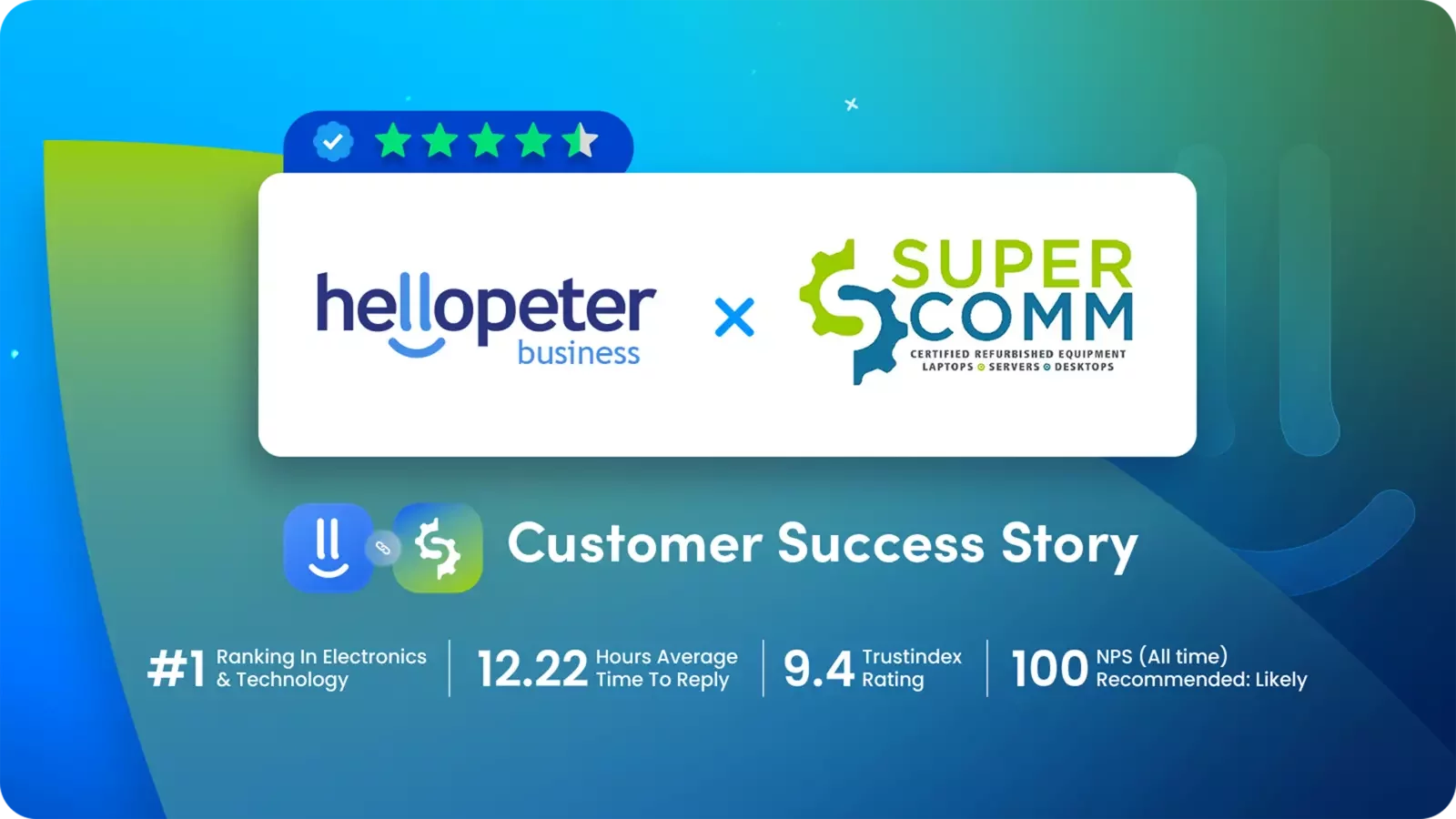
How Super Communications Got to Rank #1 in 3 Industries on Hellopeter
UP NEXT
7 THINGS CUSTOMERS CHECK ONLINE BEFORE BUYING FROM YOU THIS BLACK FRIDAY